
No. 27
Can't We Just Write the Grant Report With ChatGPT?
A friend asked me what stops a nonprofit from doing funder reporting in-house with a chatbot. Fair question. Here's the honest answer: the writing was never the hard part, and the part that is hard is also the part that keeps participants safe.

The Tea the short version
- A chatbot can write a good paragraph. It cannot hold your program: the records, the definitions, the funder's requirements and last quarter's numbers.
- Pasting participant records into a general AI tool is a privacy problem the moment it happens. Case data needs a locked room, not a chat window.
- The hard part of funder reporting is the structure underneath, which is why it should be built once and asked the same way every cycle.
- Use the chatbot for the sentence. Use a data house for the number.
A friend of mine, the kind who tells you the truth because he likes you, looked at Storyhouse last week and sent me one line: "You may be competing with people who will try to do this in-house with Claude. So you need an edge."
He's right. So here's my honest answer, because I think it's useful whether you ever buy anything from me or not.
The writing was never the hard part
I have sat with program staff the week before a report is due more times than I can count. Three spreadsheets. A survey export. A folder of sign-in sheets. A funder template asking what changed for people.
Nobody in that room is stuck on the paragraph. They're stuck on the number. Which of these 212 rows are the same person twice? Does "completed" mean finished the class or finished the class and did the follow-up? What did we tell this funder we'd measure, and did we actually collect it? What did we report last quarter, and is this quarter counted the same way?
A chat window is wonderful at the paragraph. It is no help at all with those questions, because it doesn't hold the program. It has whatever you pasted in, for as long as the tab is open, and it will give you a confident sentence either way.
What "holding the program" means
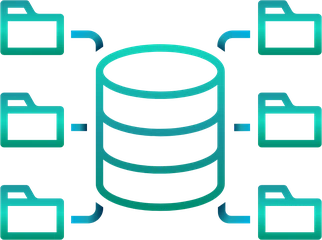
When I say a data house, I mean something boring and specific. One place where the program's plan, its records, its definitions and its funder requirements live together, with a memory.
Here's what that buys you.
Every number has a receipt. A funder clicks "95% improved their scores" and sees the 98 de-identified people behind it: participant IDs, before and after, their site, never their names. Where someone said yes to sharing, their own words sit under the table. A claim becomes evidence.
The funder's questions are already in the room. Drop in the grant agreement and the system pulls out every requirement, target and deadline, then shows which ones your records can answer today, which are partial, and which are gaps you need to start collecting. That is the real question every program director has, and no prompt gets you there without someone who has done this work.
It asks the same way every time. The in-house version is one smart person with a good prompt. It works until that person leaves, gets busy, or asks the question slightly differently in March than they did in January. A system keeps the definitions and the history, so the next report is faster than the last one instead of starting from zero.
The line a chatbot shouldn't cross
This is the part I'd want every nonprofit to hear even if they never think about software again.
The moment a staff member pastes a participant roster, a case note, a health screening or a youth intake into a general AI tool, your organization has moved that data somewhere you don't control, under terms you didn't negotiate, with no record of who did it. For a lot of programs that's a reportable incident. For all of them, it's a betrayal of the trust a person extended when they filled out your form.
Participant records belong in a locked room: encrypted, role-controlled, logged, and walled off from everyone who isn't on your team. AI can help with the writing. It should see aggregates and de-identified summaries, not the roster. That isn't a Storyhouse rule. It's a decency rule, and I built Storyhouse to follow it by default.
So, do you need to buy anything?
Honestly, maybe not. If you run one program, report to one funder, and have a person who loves spreadsheets and isn't going anywhere, you can get a long way with a clean workbook, written definitions and a chatbot for the prose. I'd rather you do that well than buy something you won't use.
But if you run several programs, answer to several funders, or your "data person" is the program director at 10 p.m. the night before the deadline, then the thing you're missing isn't a better paragraph. It's the house underneath it.
That's what I built. Storyhouse takes the spreadsheets, surveys and sign-in sheets you already keep, puts them in a structure with a memory, and writes the report with every number open to the people behind it. You can walk through a sample program without signing up for anything, and judge for yourself.
Use the chatbot for the sentence. Use a data house for the number. And never, ever paste the roster.
Questions people ask
Can a nonprofit use ChatGPT or Claude to write a grant report?
For the prose, yes, and plenty do. What a chat window can't do is hold the program's records, definitions, funder requirements and history, link every number back to its source rows, or ask the same questions the same way every reporting cycle. Those are the parts that make a report trustworthy and repeatable.
Is it safe to paste participant data into an AI chatbot?
Treat it as no. Names, case notes, health, housing or youth records belong in an encrypted system with roles and an activity log, not in a general tool whose terms you didn't negotiate. If you want AI help with writing, give it aggregates and de-identified summaries, never the roster.
What does "every number links to its source" actually mean?
It means a reader can click a figure like "95% improved" and see the exact de-identified rows that produced it, how it was calculated, and the period it covers. That's the difference between a claim and a receipt, and it's what funders increasingly expect.

Your host
Dei’Marlon “D” Scisney
Founder & Principal Data Engineer, The Data Guys™
Data engineer, teacher and civic technologist. Vice-Chair of Seattle’s Community Technology Advisory Board. Raised by his grandmother in Evansville, Indiana; building community technology centers in Seattle’s Central District and back home in Evansville.
I am not a lawyer, and nothing here is legal advice. Facts were current when this was written, and every claim links to its source. Spot something that has changed? Tell me and I’ll update it.